Things to Do in Brazzaville
Congo River sunsets, loud laughter, and the city that never apologizes
Top Things to Do in Brazzaville
Find activities and tours you'll actually want to do. Book through our partners -- no booking fees.
Plan Your Trip
Essential guides for timing and budgeting
Climate Guide
Best times to visit based on weather and events
View guide →Day Trips
The best excursions and nearby destinations worth the journey
Explore day trips →Where to Stay
Best neighbourhoods, hotel picks, and booking tips
Find hotels →Travel Insurance
What's required, what coverage matters, and how to get a quote
Read guide →What to Pack
Climate-specific gear, essentials, and what to leave at home
See packing list →When Should You Visit Brazzaville?
Tap a month for weather, crowds, and highlights
View full year-round climate guide →Explore Brazzaville
Bacongo
City
Bacongo District
City
Basilique Sainte Anne Du Congo
City
Cathedrale Du Sacre Cur
City
Centre Culturel Francais
City
Congo River Waterfront
City
Corniche
City
Corniche De Brazzaville
City
Ecole Nationale Des Beaux Arts
City
Ile Mbamou
City
Marche De Poto Poto
City
Marche Total
City
Mausolee Marien Ngouabi
City
Maya Maya Airport Area
City
Musee National Du Congo
City
Palais Du Peuple
City
Parc Zoologique De Brazzaville
City
Pierre Savorgnan De Brazza Memorial
City
Poto Poto
City
Poto Poto District
City
Rapids De Livingstone
City
Stade Alphonse Massamba Debat
City
Your Guide to Brazzaville
About Brazzaville
The humidity slaps you the second the plane door opens, carrying the scent of fermenting manioc and the sharp green bite of the Congo River. Brazzaville never eases you in. Rue de Kinkala roars with motorcycle taxis that charge 500 CFA ($0.85) for a weaving, three-minute dash past the ochre walls of the Poto-Poto market, where tailors hawk wax-print shirts so bright they vibrate against the red dust.
Downtown around Boulevard de la Révolution, diesel mingles with grilled capitaine, and the sound system from Le Reliquat bar rattles windows until 3 a.m. Five minutes away, the Corniche is a quiet half-moon of languid river water and fishermen's pirogues painted sky-blue. You'll eat moambe chicken, palm-oil red, peanut-thick, for 3,500 CFA ($6) under a corrugated roof in Ouenzé, or pay 15,000 CFA ($26) for the same dish plated on white linen at Mikhael's.
Both taste like Sunday at someone's grandmother's house. Power cuts happen daily. The generator kicks in like a dying lawn mower. Still, the night skyline across the river to Kinshasa flickers like a broken strand of Christmas lights, and the beer stays cold. That contradiction, ramshackle and radiant, is why visitors leave already plotting their return.
Travel Tips
Transportation: Green-and-yellow taxi-motos swarm every junction. Agree on 500 CFA ($0.85) before you swing a leg over. For dignity and air-con, grab the dozen orange taxis parked outside Maya-Maya airport. They'll quote 5,000 CFA ($8.50) to town but settle at 3,500 CFA ($6) if you walk 100 m past the terminal. City buses exist but only run when the driver feels like it. Download the Yango ride-hail app for predictable fares and a cash-free ride from Poto-Poto to Les Rapides at rush hour.
Money: CFA francs only. ATMs inside BGFIBank on Avenue Foch rarely run out of small bills, and the exchange window at Maya-Maya gives a better rate than any hotel desk. Carry a wad of 500 CFA notes. Moto drivers and street food vendors never have change. Credit cards work at the big supermarkets like Score but forget about them in the markets. Cash is king and slightly negotiable.
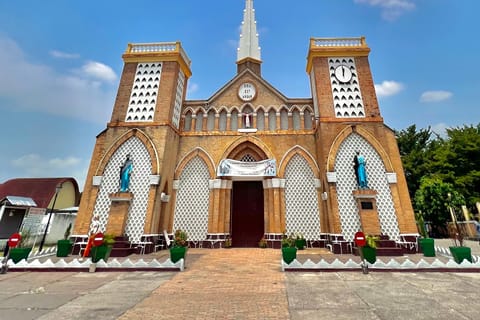
Cultural Respect: Handshakes linger, three pumps minimum, then a gentle squeeze. Dress modest knees at Marché Total and Poto-Poto. A collared shirt gets you waved through government checkpoints without the usual questions. Greet elders first in Lingala: 'Mbote, papa' earns a smile wider than any French attempt. Sunday mornings belong to church choirs. Don't blast music from your taxi near Église Sacré-Coeur before noon.
Food Safety: The moambe stand on Rue Bokassa has been bubbling the same pot since 1994. Look for the queue of office workers at noon and the cloud of red palm-oil steam. Skip raw onions; they're rinsed in river water that can ruin a long weekend. Bottled water (500 CFA/$0.85) is everywhere except at the Sunday craft market. Bring your own. Ice at Le Reliquat is trucked in daily. If you see cloudy cubes, switch to beer.
When to Visit
Brazzaville's heat is unapologetic. From June to August, peak dry season, temperatures hover at 32 °C (90 °F) and rain is a rumor. Hotel prices spike 30 % and the best rooms at Ledger Plaza or Mikhael's book out two months ahead. September brings the first storms: short, warm downpours that slash humidity and drop nightly lows to 24 °C (75 °F).
October to December is the sweet spot, rooms cost 25 % less, skies clear by 9 a.m., and the mango season hits its sticky peak. January and February are muggy with daily thunderstorms. Flights from Paris drop 20 %, but river excursions to Les Rapides get cancelled when the Congo swells. March through May is outright punishing, 34 °C (93 °F) most afternoons, power cuts more frequent.
Yet the FESPAM music festival explodes across town every April with outdoor concerts that run until sunrise. Families tend to come in July, August for predictable weather. Solo travelers looking for deals land in October when the Harmattan wind blows fine Saharan dust that turns sunsets blood-orange and hotel lobbies smell faintly of woodsmoke.
More Ways to Experience Brazzaville
Tours, day trips, and local experiences curated by on-the-ground operators.
Didn't see anything interesting yet?
Browse Viator's full catalog of tours, day trips, food experiences, and private guides in Brazzaville.
See All Brazzaville Tours on Viator