Things to Do in Brazzaville in August
August weather, activities, events & insider tips
Low Season · Budget Friendly
August Weather in Brazzaville
Long-run averages for August
84°F (29°C)
High Temp
68°F (20°C)
Low Temp
0.4 inches (10 mm)
Rainfall
64%
Humidity
8
Sunny-Day UV
⚠ Dry-season dust in August reduces air quality in outer neighborhoods where roads remain unpaved. The fine red laterite particles can irritate respiratory conditions, and travelers with asthma or dust sensitivities should carry appropriate medication and consider limiting time in Ouenze and other peripheral quartiers where vehicle traffic churns the worst of it.
⚠ Malaria transmission continues year-round in Brazzaville regardless of season. Antimalarial prophylaxis, insect repellent, and sleeping under treated nets are essential even in August when mosquito populations are lower than wet-season months.
Is August Right for You?
Weigh the advantages and considerations before booking
Advantages
- + August anchors Brazzaville in its dry season. The shift feels instant. Humidity falls to around 64 percent. This marks the annual low. Compare that to the 80-plus percent saturation during the wet months of October through May. Stepping into Poto-Poto or along the Corniche in August feels almost pleasant. It certainly beats the full-body sauna of March. You can schedule outdoor days without fearing afternoon deluges. The red laterite roads that turn to ankle-deep mud in November stay firm and passable. Pack light gear now. The air stays clear.
- + August 15 marks Congo's Independence Day, the Fete Nationale. Brazzaville transforms completely. The boulevard past the Palais du Peuple fills with morning military parades. Live music stages follow immediately. Open-air dancing spills through Bacongo and Poto-Poto well past midnight. Congolese rumba bands perform publicly on every corner. The street energy carries an unscripted feel. Formal cultural festivals in bigger cities rarely manage that vibe. Time your trip to bracket this date. You will see a side of Brazzaville that no hotel concierge can arrange. Bring plenty cash today.
- + August delivers only about 0.4 inches (10 mm) of rain across the entire month. These conditions give you the clearest skies. Look across the Congo River toward Kinshasa. It sits less than 2 km (1.2 miles) away on the opposite bank. Late afternoon light turns the river a coppery brown. This contrasts sharply with the silhouette of the DRC skyline. Photographers who have worked both sides of the river will tell you the Brazzaville bank gives the better composition. Dry air means fewer mosquitoes. That saves your skin. Malaria prophylaxis remains non-negotiable in this city. Pack sunscreen.
- + August stays slightly off the radar. This applies even to the thin stream of business travelers who make up most of Brazzaville's visitor traffic. European offices sit on summer holiday. The diplomatic circuit slows down completely. That means the city's limited stock of decent accommodation loosens up. Conference weeks in the wet season run tight. You will not scramble for the last room. The airport feels noticeably calmer. Immigration lines at Maya-Maya move faster. Skip the hour-long crawl you might hit in October. Sleep early.
Considerations
- − Brazzaville is an expensive city by any standard. August does not change that reality. The oil economy and a significant expat population push costs upward. Accommodation, transport, and dining exceed prices in Nairobi, Accra, or Addis Ababa for comparable quality. Budget travelers will find very few options below the mid-range bracket. Even those choices can feel rough around the edges. The city's pricing reflects its small tourism market. Luxury does not drive these rates. Manage your expectations accordingly. Bring cards.
- − The dry season brings dust. Brazzaville faces this reality by August. The city goes two months without meaningful rain. Unpaved roads dominate a significant share of the city's streets outside Centre-Ville. These surfaces kick up a fine red laterite powder. That powder coats everything. Your white shirt will not survive a moto-taxi ride through Ouenze. Dust enters your throat quickly. Walking proves uncomfortable. Contact lens wearers must switch to glasses. Carry rewetting drops. Bring tissues.
- − Brazzaville's tourism infrastructure stays strictly limited. Hop-on-hop-off buses simply do not exist here. Slick visitor centers are absent. Reliable English-language signage is nowhere to be found. French is the working language. Lingala runs the street language. Getting anything done without at least basic conversational French adds friction to every interaction. Visitors who have only visited well-oiled tourism economies will find local logistics demanding. You need more patience. You need more cash in hand. You need a willingness to sit with uncertainty. Pack spare change.
Best Activities in August
Top things to do during your visit
Congo River Pirogue Excursions
August delivers low water and calm currents. These conditions create the safest and most rewarding month for boarding the Congo River in a traditional pirogue. Local fishermen have used these long wooden canoes for generations. The river narrows slightly during the dry season. Sandbars around Ile Mbamou become accessible for landing. This large island splits the channel between Brazzaville and Kinshasa. Water access provides a perspective no land-based tour can match. Listen to the sound of the current against the hull. Notice the smell of river water and drying fish from the camps along the bank. Witness the almost surreal visual of two national capitals facing each other across a body of water. Swimming across this expanse proves theoretically possible but practically inadvisable. Morning departures catch the river at its glassiest. Schedule ideally before 8 AM. This timing avoids the midday glare that bounces off the water at punishing angles. Plan a half-day commitment. Bring a hat that won't blow off. Secure shade.
Booking Tip: Arrange through licensed river operators at least a week ahead. Demand operators who provide life jackets. This service is not a given everywhere. Confirm that the pirogue carries a working outboard motor for backup. Check current options in the booking section below for guided river excursions. Book early.
Poto-Poto Art School and Market Quarter Walking Tours
The Ecole de Peinture de Poto-Poto, founded in 1951, resists a quick twenty-minute walkthrough. This space operates as a working art school. Painters still produce in the signature Poto-Poto style. Vivid oranges and greens dominate burlap canvases. Flattened figures form rhythmic patterns. These designs owe as much to Congolese textile traditions as to any European instruction the school's French founder brought. August's dry conditions keep open-air workshops fully active. Artists dry canvases in the sun instead of stacking them indoors against the rain. The surrounding Poto-Poto quarter pulses with street-level commerce. Sewing machines clatter from tailor stalls. Grilled plantain smells waft from corner vendors. A guided walk connects the school to the broader market district. Watch woodcarvers work in real time. Budget two to three hours. Wear shoes that can handle uneven ground. Step carefully.
Booking Tip: Book a local guide with art-scene knowledge at least several days ahead. Keep groups tight. Four to six people maximum. Small numbers let you talk with artists, not just shuffle past. Check the booking section below for cultural walking tours.
Les Rapides du Djoue Nature Walks
Where the Djoue River meets the Congo on Brazzaville's southern edge, water crashes over exposed rock shelves in rapids that locals use as weekend swimming spots during the dry season. August drops the water level enough to reveal the full extent of the rock formations. The surrounding forest canopy, while not lush the way it gets in rainy months, stays thick enough to keep shade temperatures several degrees cooler than Centre-Ville. The air smells of damp stone and vegetation rather than exhaust. Rapids drown out everything except birdsong. It is roughly 15 km (9.3 miles) from Centre-Ville. The drive passes through increasingly green neighborhoods showing a different texture of Brazzaville life. Bring water and sturdy sandals. Rocks near the rapids stay slick even in the dry season.
Booking Tip: This works as a self-arranged half-day trip or through local nature guides who know the safe swimming sections. Arrange transport in advance. Taxis back from Les Rapides can be scarce in the afternoon. See the booking section below for nature excursions around Brazzaville.
Bacongo Sapeur Culture Encounters
The SAPE movement, the Societe des Ambianceurs et des Personnes Elegantes, was born in Bacongo. August is a fine month to see it in action. The sapeurs are Brazzaville's self-appointed dandies. They wear tailored three-piece suits, Italian leather shoes, and pocket squares despite heat that would justify shorts and flip-flops anywhere else. The disconnect between modest concrete-block neighborhoods and meticulous elegance is the whole point. It is performance, philosophy, and community identity compressed into a wardrobe. Independence Day on August 15 draws the sapeurs out in force for an informal fashion competition. Surrounding days see impromptu gatherings in bars and open-air terraces along Bacongo's main streets. Dry weather keeps suits pristine and mood outdoors. This is not something you observe from a bus window. Walk. Sit. Accept the offer of a drink. Ask questions in French.
Booking Tip: Cultural guides with sapeur community relationships can arrange introductions that feel organic rather than staged. Book at least a week ahead. Confirm the guide is from Bacongo or has longstanding ties there. Check the booking section for cultural experience tours.
Basilique Sainte-Anne and Colonial Architecture Circuit
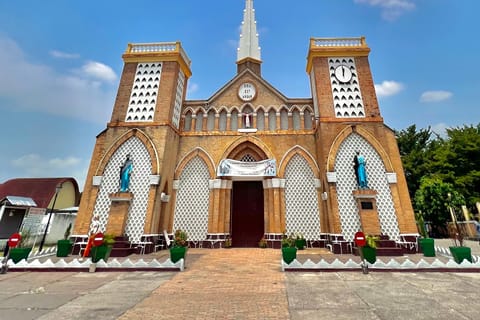
The Basilique Sainte-Anne du Congo, completed in 1949, stops you mid-sentence. Its green-tiled roof arches upward in a shape borrowing from Gothic vaulting and the curve of a traditional Congolese hut. Interior light filters through stained glass throwing colored patches across the concrete floor. The acoustic quality makes even whispered conversation carry. In August, low humidity keeps the interior cool without the clammy dampness of wet months. From the basilica, a walking circuit through Centre-Ville connects remaining colonial-era buildings. The old governor's residence. The riverfront administrative quarter. Tree-lined avenues still carry a faintly Parisian grid despite decades of tropical entropy. The Pierre Savorgnan de Brazza Memorial, a marble mausoleum completed in 2006 for the city's colonial founder, sits along this route. It provokes exactly the complicated reaction it should. Two to three hours covers the circuit comfortably in August's dry conditions.
Booking Tip: The basilica is open to visitors outside of service times. Confirm hours locally as schedules shift. A guide with architectural and historical knowledge elevates this significantly. See the booking section below for heritage walking tours.
Where to Stay in Brazzaville in August
Hand-picked hotels across price tiers for August travellers.
Public Holidays in August
Dates that affect opening hours, transport and crowds
Fête Nationale
Known in English as National Day. Observed nationwide as a public holiday.
Fête Nationale
Known in English as National Day. Observed nationwide as a public holiday.
Packing Checklist
Bookmark this page — your progress is saved between visits
Need the full list with shopping links?
Climate-specific gear, brand recommendations, and what to leave at home.
View Brazzaville Packing List →Essential Tips
Insider knowledge and common pitfalls to avoid
Insider Knowledge
The ferry crossing between Brazzaville and Kinshasa, barely 2 km (1.2 miles) across the Congo River, is one of the world's shortest international border crossings. It requires a DRC visa arranged in advance. The process at the port can consume half a day in bureaucratic friction. Sort the visa before you arrive in Brazzaville. Go early in the morning when the immigration officers are fresh and the queues have not yet compounded. Do not attempt it on or near August 15. The port effectively shuts down for the holiday.
Brazzaville's live music scene is the city's greatest cultural asset. It happens mostly in unmarked bars in Poto-Poto and Bacongo. A cold Primus beer and a plastic chair get you a front-row seat to rumba bands that play with a looseness and skill that formal concert settings rarely produce. Ask your hotel staff or guide where the music is happening tonight. The venues shift week to week. Nothing is posted online. Thursday through Saturday nights are the most reliable. The music rarely starts before 10 PM.
Negotiate taxi fares before getting in. Every single time. Confirm the currency. Some drivers will quote in Congolese francs rather than CFA francs to confuse visitors. The difference is significant. If you have a local contact or guide, have them negotiate your first few rides so you learn the going rate between major points. Centre-Ville to Bacongo should cost meaningfully less than Centre-Ville to the airport. Any driver who claims otherwise is testing you.
The best eating in Brazzaville is not in restaurants. It is at the grillades, the open-air charcoal grill stations that appear along main roads in the late afternoon. The smell of smoked fish and chicken fat hitting hot coals carries for blocks. The chikwangue, fermented cassava paste wrapped in banana leaves, served alongside is the starch that defines Congolese cooking. Point at what looks good. Eat with your hands. Accept that the combination of woodsmoke in your clothes and palm oil on your fingers is the price of the best meal in the city.
Avoid These Mistakes
Do not confuse Brazzaville with Kinshasa. Do not refer to the country as 'the Congo' without specifying which one. The Republic of the Congo, Congo-Brazzaville, is a different country from the Democratic Republic of the Congo across the river. Locals are sensitive to the distinction and will correct you, politely the first time. Getting the country right is basic respect. Getting it wrong marks you immediately as someone who did not prepare.
Do not assume Brazzaville operates on a schedule. Meetings start late. Restaurants open when the cook arrives. The ferry leaves when it is full. Asking 'what time exactly' earns you a shrug that is not rudeness but an honest reflection of how the city works. Build slack into every plan. Carry a book. Treat the waiting as part of the experience rather than a failure of logistics. Travelers who run tight itineraries in Brazzaville spend most of their trip frustrated.
Never photograph people, government buildings, or military installations without asking. This is not a cultural nicety. It is a practical safety issue. Police and soldiers in Brazzaville take unauthorized photography seriously. Having your camera confiscated or being detained for questioning is a real possibility. Always ask before shooting portraits. Never point a lens at anything that looks official. If someone in uniform tells you to stop, comply immediately and without argument.
Ready to plan your trip to Brazzaville?
Now that you've got the research covered, here's where to go next.
Book Experiences in Brazzaville
Top-rated things to do in Brazzaville this August

Explore More Activities in Brazzaville
Didn't see anything interesting yet?
Browse Viator's full catalog of tours, day trips, food experiences, and private guides in Brazzaville.
See All Brazzaville Tours on Viator