Things to Do in Brazzaville in September
September weather, activities, events & insider tips
Low Season · Budget Friendly
September Weather in Brazzaville
Long-run averages for September
87°F (30°C)
High Temp
71°F (21°C)
Low Temp
1.7 inches (43 mm)
Rainfall
68%
Humidity
10
Sunny-Day UV
⚠ Equatorial UV exposure is extreme throughout September despite comfortable-seeming temperatures. The sun passes nearly directly overhead. Reflected glare off the Congo River and the city's concrete surfaces compounds direct exposure. Sunburn can occur within thirty minutes of unprotected outdoor activity. Pack high-SPF sunscreen. Reapply often.
⚠ Malaria transmission continues year-round in Brazzaville. Consult a travel medicine specialist about prophylaxis well before departure. Use insect repellent and bed nets regardless of the dry season's reduced mosquito activity. The risk remains real. Take pills. Sleep under nets.
Is September Right for You?
Weigh the advantages and considerations before booking
Advantages
- + September lands at the tail end of Brazzaville's dry season, delivering just 1.7 inches (43 mm) of rain compared to October's sudden 6.4 inches (163 mm) deluge. You get reliably clear mornings, predictable heat, and the kind of golden-hour light along the Congo River that photographers wait months for. The laterite roads that turn to ankle-deep mud by November are still firm and walkable.
- + Humidity sits at 68 percent, the second-lowest reading of the year after August's 64 percent. By Brazzaville standards this is practically arid. The sticky, oppressive air that blankets the city from November through April lifts enough in September that walking the Corniche at midday is uncomfortable rather than unbearable, a meaningful distinction when your alternatives are limited.
- + Accommodation availability tends to be wide open. Brazzaville's visitor traffic, such as it is, concentrates around diplomatic conferences and NGO calendar cycles. September falls between the major institutional events, so rooms that require weeks of advance booking during peak conference months often have same-week availability. Rates reflect the slack.
- + The mango trees that line Avenue de la Paix and the residential streets of Bacongo start showing early fruit by late September, a signal the season is about to turn. The markets at Marche Total shift their inventory accordingly. Avocados are still plentiful, smoked river fish piles high on the wooden tables, and the cassava leaf vendors at Marche Poto-Poto are selling saka-saka by the basin. It is one of the best months to eat well and cheaply in the city.
Considerations
- − September's dry heat can be punishing. Daytime highs averaging 30°C (87°F) with direct equatorial sun mean the UV exposure is relentless, and shade is scarce outside the tree-lined residential quarters of Bacongo and the diplomatic district around Plateau. The city's concrete and corrugated iron absorb and radiate that heat well into the evening.
- − Dust is the dry season's tax. By September, months without significant rain leave a fine red laterite film on everything. Your clothes, your skin, the inside of your bag. The harmattan does not reach this far south. But Brazzaville generates its own particulate haze from unpaved roads, cooking fires, and vehicle exhaust that sits in the river valley and thickens toward dusk.
- − September sits in a dead zone for Brazzaville's cultural calendar. Independence Day celebrations wrap up in August, and the larger music festivals and arts events tend to cluster in the wet season months when the city's social energy picks up. You will find live rumba in the bars of Poto-Poto any night of the week. But the organized, large-scale gatherings are sparse.
Best Activities in September
Top things to do during your visit
Congo River Pirogue Excursions to Ile Mbamou
September's low water levels expose sandbanks along the Congo River that disappear entirely once October's rains arrive. Ile Mbamou, the large river island roughly 20 km (12.4 miles) downstream from the city center, is accessible by motorized pirogue in about 45 minutes from the embarkation points near the Corniche. The crossing itself is the experience: the river narrows between Brazzaville and Kinshasa to barely 1.6 km (1 mile) at the Pool Malebo, and from mid-channel you can see both capitals simultaneously, one of the only places on Earth where two national capitals face each other across a river. On the island, fishing villages operate on a rhythm that has not changed in decades. The smell of fresh-smoked capitaine drifting from the drying racks hits you before you beach the pirogue. September's lower humidity and stable weather make the open-water crossing more comfortable and predictable than any other month. Go in the morning before the wind picks up on the river, ideally departing by 7 AM.
Booking Tip: Arrange river crossings through licensed pirogue operators at the embarkation point near the Meridien area of the Corniche. Negotiate the trip the afternoon before for an early morning departure. Life jackets are non-negotiable. See current options in the booking section below.
Poto-Poto Art School and Gallery Quarter Walking Tour
The Ecole de Peinture de Poto-Poto, founded in 1951 by Pierre Lods, remains one of Central Africa's most significant art institutions, and September's dry, mild mornings make walking the surrounding quarter pleasant rather than an endurance exercise. The school occupies a circular building in the Poto-Poto district, and the painters work with their doors open. You can stand and watch artists mixing earth pigments on palettes while the neighborhood soundtrack of Lingala conversation, radio rumba, and the rhythmic thud of a mortar pounding cassava fills the compound. The galleries in the immediate vicinity sell canvases that range from tourist souvenirs to serious contemporary work. The trick is spending enough time to tell the difference. September's low visitor numbers mean you are likely the only foreigner in the room, and the artists tend to be more conversational when they are not performing for a crowd. Allow a full morning, starting around 8 AM when the light is good and the painters are already at work.
Booking Tip: Walking tours of the arts district are best arranged through cultural guides who can introduce you to the painters personally rather than wandering in cold. Book at least a week ahead through local tour operators or see current options in the booking section below.
Les Rapides du Djoue and Riverside Nature Walks
The Djoue River rapids sit roughly 15 km (9.3 miles) south of central Brazzaville, where the Djoue tributary meets the Congo. September is when they look best. The reduced water volume exposes dark basalt rock formations that the wet season buries under churning brown water. Spray from the remaining cascades creates a microclimate that drops the temperature by several degrees. You can hear the rapids from 200 meters (656 feet) away. The sound builds as the red dirt path descends through scrubby forest. The rocks are slippery year-round. Wear proper footwear. The surrounding area supports a surprising density of birdlife. September's dry conditions make spotting easier. The canopy thins. Birds congregate near remaining water. Mornings before 9 AM work best. Temperatures are cooler. Wildlife activity peaks then.
Booking Tip: Hire a guide familiar with the terrain and the safe approach routes. The rocks near the rapids are dangerous when wet. A half-day trip is sufficient. See current nature excursion options in the booking section below.
Congolese Rumba Live Music Evenings in Poto-Poto and Bacongo
Brazzaville invented Congolese rumba. Not contributed to it. Not influenced it. Invented it. The bars and open-air music venues scattered through Poto-Poto and Bacongo are where the genre was born in the 1940s and 50s. On any given evening in September, you can find a live band working through slow, hypnotic guitar patterns. Franco, Tabu Ley Rochereau, and their successors built this into one of Africa's most influential musical traditions. The sound carries differently in September's drier air. It is cleaner and less muffled than during the wet months when humidity deadens everything. Most venues start late. Nothing of consequence happens before 9 PM. The serious music rarely begins until 11 PM or later. The air outside stays warm from the day's heat. It carries the smell of grilled brochettes from vendors who set up around any venue drawing a crowd. This is not background music. The bands play three-hour sets with full horn sections, multiple guitarists, and a rhythmic intensity that will rearrange your understanding of what live music can be.
Booking Tip: No advance booking needed for most venues. Ask your accommodation staff or any Brazzavillois which bar has the best band that week. The scene rotates. Cover charges where they exist are nominal. See the booking section below for guided nightlife experiences.
Marche Total and Marche Poto-Poto Food and Culture Immersion
Brazzaville's major markets are at their most navigable in September. The lanes between stalls dry out. The produce sections are fully stocked with late-dry-season abundance. The heat, while real, lacks the suffocating edge that wet-season humidity adds. Marche Total is the larger and more chaotic of the two. It is a large complex where the smell of dried fish, palm oil, and freshly ground peanut paste creates an olfactory wall you walk into from thirty paces away. The fabric section alone could occupy an hour. Bolts of wax-print cotton in patterns shift with fashion seasons most outsiders never track. Marche Poto-Poto, in the arts district, is smaller and more approachable. It has food stalls where you can eat saka-saka and fufu prepared in front of you. The cassava leaves are pounded to a dark green paste with a rhythmic thwack that is the market's metronome. Go early. By noon the heat concentrates under the tin roofing. The experience shifts from immersive to punishing. Bring small denominations of CFA francs.
Booking Tip: A local guide transforms this from overwhelming to illuminating, for navigating food stalls and understanding what you are eating. Half-day market tours are the right format. See current guided experiences in the booking section below.
Memorial Pierre Savorgnan de Brazza and Colonial Quarter Heritage Walk
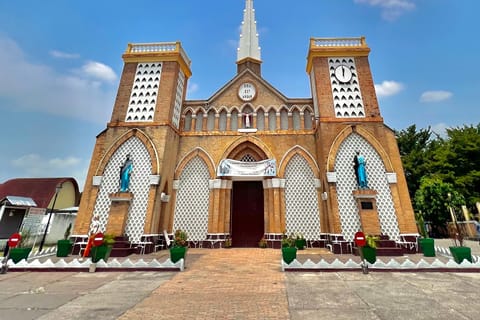
The memorial to the city's namesake sits on the Corniche. It is a marble and glass structure completed in 2006. It houses the remains of the Franco-Italian explorer. This is your starting point for understanding Brazzaville's layered colonial history. September's clear skies make the walk from the memorial through the Plateau administrative district enjoyable. You will pass the Cases de Gaulle where the Free French operated during World War II, then head down toward the Cathedral Sacre-Coeur. The architecture tells a story most cities would rather forget. Brazzaville does not flinch from it. The memorial itself is air-conditioned. This relief feels earned after twenty minutes on the exposed Corniche where the sun bounces off the river and the concrete in equal measure. From the upper terrace, the view across to Kinshasa is unobstructed. The skyline of the DRC capital shimmers in the heat haze barely 1.6 km (1 mile) away. Allow two to three hours for the full walk including the memorial interior.
Booking Tip: The memorial has an entrance fee. Guided heritage walks covering the colonial quarter and the memorial are the most informative way to absorb the historical context. Book through licensed cultural guides or see current options in the booking section below.
Where to Stay in Brazzaville in September
Hand-picked hotels across price tiers for September travellers.
Packing Checklist
Bookmark this page — your progress is saved between visits
Need the full list with shopping links?
Climate-specific gear, brand recommendations, and what to leave at home.
View Brazzaville Packing List →Essential Tips
Insider knowledge and common pitfalls to avoid
Insider Knowledge
The Sapeurs of Bacongo are not a tourist attraction. They are a subculture, a philosophy, and, for the men and women who participate, an identity that predates any Western fashion magazine's discovery of them. If you want to see Sapeurs in their full regalia, Sunday mornings in Bacongo after church is when they promenade. Approach with respect, not a telephoto lens. Ask before photographing. Most will say yes and strike a pose that would embarrass a runway model. But the asking matters enormously.
Brazzaville's safety profile is better than its reputation suggests. But the reputation exists for reasons. Petty theft is the primary risk, concentrated around the markets and along poorly lit stretches of the Corniche after dark. The deeper concern is police shakedowns at checkpoints, which target foreigners carrying cash or unable to produce documents. Keep your visa and passport copy accessible, stay calm, and understand that a firm but polite refusal to pay an invented fine usually works. Actual violent crime against tourists is rare by Central African standards.
The ferry crossing to Kinshasa from the Beach neighborhood port is one of the most surreal border crossings on Earth. Two national capitals separated by 1.6 km (1 mile) of river, and the crossing takes about twenty minutes. Visas for the DRC must be arranged in advance at the embassy in Brazzaville, and the process can take days, so plan ahead if you intend to cross. The port itself is chaotic, loud, and smells of diesel and river water. Do not attempt this crossing after 3 PM.
Brazzaville's restaurant scene, such as it is, peaks at lunchtime, not dinner. The serious Congolese cooking, the poulet a la moambe simmered in palm nut sauce until the oil separates into a deep orange slick, the liboke de poisson where river fish is wrapped in banana leaves with tomatoes and onions and steamed over charcoal, happens at midday when the kitchens are fully staffed and the ingredients are fresh from the morning market run. By evening, many places are serving reheated versions of the lunch menu or have run out of their best dishes entirely. Adjust your eating schedule accordingly. The biggest meal at noon, something light in the evening.
Avoid These Mistakes
Confusing Brazzaville with Kinshasa or referring to the country as the DRC. The Republic of the Congo and the Democratic Republic of the Congo are different nations with different visa requirements, currencies, and entry procedures. Locals are polite about this mistake exactly once.
Assuming September's relatively low rainfall means you can ignore hydration and sun protection. The 1.7 inches (43 mm) of rain mostly arrives in brief late-afternoon bursts that offer no meaningful cooling. The rest of the time you are under direct equatorial sun at 30°C (87°F) with no cloud cover. Dehydration sneaks up fast, and sunburn at this latitude is severe.
Attempting to photograph military installations, government buildings, or police checkpoints. This is treated as a security offense in the Republic of the Congo, and your camera or phone can be confiscated. The presidential palace, the military camps near the airport, and even some bridges are off-limits for photography. When in doubt, ask before raising your camera, and accept a no without argument.
Ready to plan your trip to Brazzaville?
Now that you've got the research covered, here's where to go next.
Book Experiences in Brazzaville
Top-rated things to do in Brazzaville this September
Explore More Activities in Brazzaville
Didn't see anything interesting yet?
Browse Viator's full catalog of tours, day trips, food experiences, and private guides in Brazzaville.
See All Brazzaville Tours on Viator